
Guide
Best Sunglasses for Driving: What to Look For
GlareBear November 24, 2026 5 min read
The short answer
For daytime driving, choose medium to dark lenses (category 2 or 3) in grey, brown or green, which keep traffic signals easy to read. Pick a frame with slim temples so your side view stays open, and a snug fit so the pair stays put. Never drive in category 4 lenses, and don't wear sunglasses to drive at night.
Driving sunglasses at a glance
Driving asks two things of a pair of sunglasses. They must cut bright light and glare, and they must still let you see the road, the signals and the dashboard clearly. That rules out some lenses and frames that are fine on a beach.
| Choice | On the road | Watch for |
|---|---|---|
| Grey lens | Dims light evenly and keeps colours close to natural | Can feel flat in haze or low cloud |
| Brown or amber lens | Adds contrast, so edges and road markings stand out | Shifts colours toward warm |
| Green lens | Sits between grey and brown for colour and contrast | Shades vary a lot between makers |
| Gradient lens | Darker at the top for sky, lighter below for the dashboard | Less dark in the lower half on very bright days |
| Mirror finish | Reflects more light away before it reaches the eye | The tint under the mirror sets the colour you see |
| Polarized lens | Cuts reflected glare from wet roads and car hoods | Some screens and windshields can look dark or patchy |
| Very dark lens (category 4) | Made for glaciers and high mountains | Marked as not suitable for driving |
How dark should driving sunglasses be?
Sunglass lenses are graded from category 0 (almost clear) to category 4 (very dark). Most everyday sunglasses are category 2 or 3, and those are the usual choice for daytime driving. Category 4 lenses let through so little light that the standard marks them as not suitable for driving. No sunglasses are meant for driving at dusk or at night, because any tint cuts light you need when it is already dim.
Lens colour and traffic signals
Grey, brown and green are the common driving tints because they keep red, amber and green signals easy to tell apart. Strong fashion colours such as deep blue or rose change how colours look, so they are a weaker pick for the car. If you are not sure, a plain grey or brown lens is the safe starting point. Our guide to sunglasses lens colours covers each tint in more detail.
Polarized lenses in the car
Polarized lenses block much of the glare that bounces off flat, shiny surfaces like wet tarmac and the hood of the car ahead. Many drivers like that. The trade-off is that some phone screens, dashboard displays and head-up displays can look dim or blank through them, and some windshields show faint patterns. If you rely on a screen while driving, check it with the pair on before a long trip. More in polarized or not: when it matters.
Frame and fit for driving
- Slim temples. Wide, flat arms can block the edge of your view when you check a mirror or look over your shoulder. Thin metal or slim acetate arms leave more side view open.
- Enough coverage. A lens that reaches your brow cuts light from above, such as low sun over the visor. Pilot and rectangular shapes do this well.
- A snug fit. Sunglasses that slide down make you push them up at the wheel. See how to tell if sunglasses fit.
- Lenses that darken in sunlight. Most windshields block most UV light, so lenses that darken with UV often stay lighter inside a car.
Pairs that fit the brief
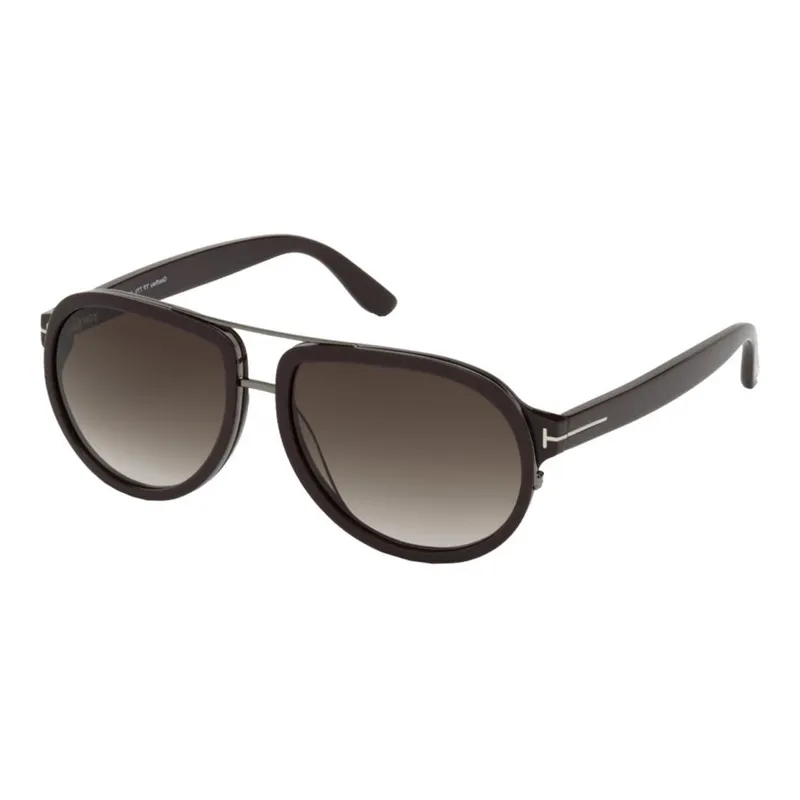
- Tom Ford FT0779 Dark Brown: a teardrop aviator with smoke gradient lenses, darker at the top. Size 58-16-140.
- Saint Laurent CLASSIC11R Black: a metal aviator with silver mirror lenses and adjustable nose pads. Size 56-15-145.
- Salvatore Ferragamo SF157S Silver: a thin silver wire aviator with brown lenses and a double bridge. Size 60-15-140.
- Carrera 259/S Black: a squared full-rim frame with solid brown lenses and a slim arm. Size 55-18-145.
- Chesterfield CH 06/S Matte Brown: a thin metal rectangle with bronze lenses and clear nose pads. Size 58-17-140.
- Hugo Boss BOSS 1532/S Gold Copper: a fine wire frame with slim temples and lenses that fade from grey to beige. Size 58-17-140.
Each product page lists the lens colour and finish for that pair. For a pair's lens rating or polarization, read its own page. Browse more in men's sunglasses, unisex sunglasses or Tom Ford, and see who aviators suit.
FAQ
What lens colour is best for driving?
Grey and brown are the most common picks. Grey keeps colours natural, and brown adds contrast. Green sits between the two.
Can I wear sunglasses to drive at night?
No. Any tinted lens cuts light you need in the dark. Sunglasses are for daytime driving only.
Are polarized sunglasses better for driving?
They cut glare from wet roads and shiny car surfaces, which many drivers like. Some car screens and phone displays can look dim through them, so test yours first.
Are gradient lenses good for driving?
Many drivers like them. The dark top handles the sky and the lighter bottom makes the dashboard easier to read. See gradient lenses explained.
Do mirrored lenses work for driving?
Yes, a mirror finish is fine for daytime driving. The tint behind the mirror is what sets the colours you see. See mirrored vs tinted lenses.
More guides
- What Makes Sunglasses Unisex? Men's vs Women's FramesWhat the unisex label on sunglasses means, how men's, women's and unisex frames really differ in size and shape, and how to pick by fit instead.Read the guide
- Lens Categories 0 to 4: How Dark Should Sunglasses Be?What sunglasses lens categories 0 to 4 mean, how much light each lets through, where each one fits, and why darker is not the same as UV protection.Read the guide
- Titanium vs Acetate vs Nylon Frames: Which Is Lightest?Nylon is the lightest material, but a thin titanium frame can weigh less than either plastic. How titanium, acetate and nylon frames compare.Read the guide