
Guide
Gradient Lenses: What They Are and When They Help
GlareBear November 21, 2026 3 min read
The short answer
A gradient lens is tinted darker in one area and lighter in another. Most are dark at the top and light at the bottom, which cuts glare from above while letting you see your phone or dashboard. A solid tint is a better choice for very bright places such as snow or open water. Lens darkness does not show how much UV a lens blocks.
What a gradient lens is
A gradient lens is tinted unevenly. The tint is strongest in one part of the lens and fades to a lighter shade in another. There are two common types.
| Type | How the tint runs | Where it helps |
|---|---|---|
| Single gradient | Dark at the top, lighter at the bottom | Bright light from above, while you still read a phone or a map |
| Double gradient | Dark at the top and bottom, lighter in the middle | Light bouncing up from water, sand or pavement |
Some product names say only "gradient" without saying which. Look at the lens photos on the pair's page to see where the dark part sits.
When a gradient lens helps
- Driving and walking. The darker top cuts glare from the sky, and the lighter bottom lets you see the dashboard or the ground more clearly.
- Moving between bright and shaded places. The lighter lower part is easier on your eyes in a shaded street than a lens that is dark all over.
- Everyday style. Many people like how a gradient looks. It reads as softer than a solid dark lens, and the eyes show a little through the lower part.
When a solid lens may suit you better
On a very bright day, such as open water or snow, a gradient leaves the lower part of the lens lighter, so you get less shading there. A solid tint gives the same darkness across the whole lens. If you spend long hours in strong light, a solid lens in a darker shade may be more comfortable. Our guide to sunglasses lens colours covers how grey, brown and green tints change how things look.
Tint is not the same as protection
How dark or light a lens looks does not tell you how much ultraviolet light it blocks. UV protection comes from the lens material or a coating, and a pale gradient can block as much as a dark solid lens. Protection is a separate property from tint, and it is worth checking the maker's own details for any pair you buy. Our guide to polarized lenses explains another feature that is also separate from tint.
Choosing the colour of the gradient
- Grey gradient: keeps colours close to natural. A safe choice if you are unsure.
- Brown gradient: warmer, and many people find it adds contrast on bright days.
- Pink, rose or blue gradient: mostly a fashion choice. These tints change colours more, so try them before you drive in them.
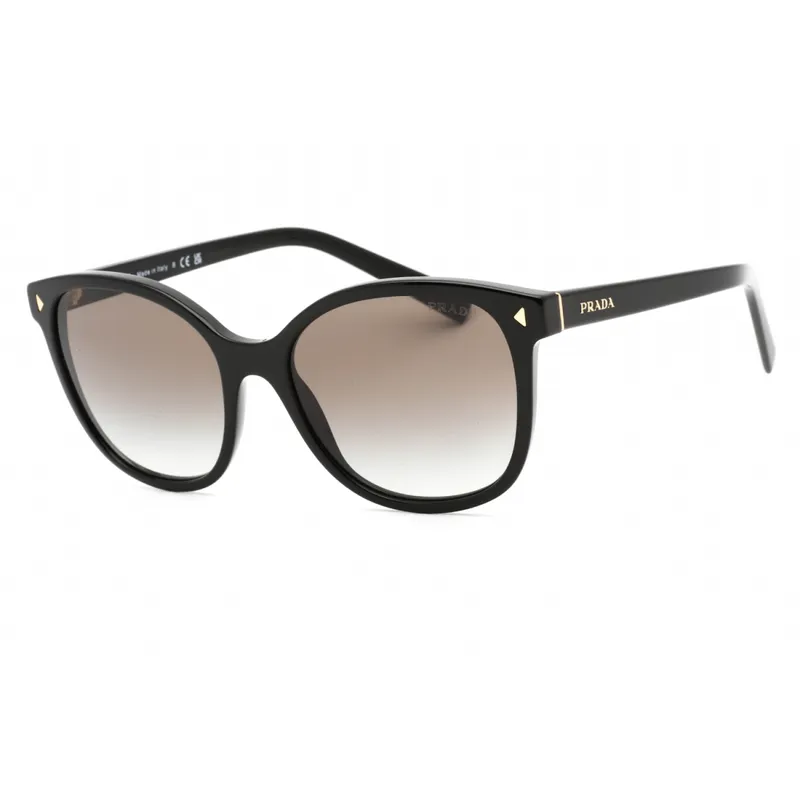
One example is the Prada PR22ZS in black: a black acetate frame, 53 mm lens width, with grey gradient lenses. Grey keeps the look neutral, and the frame suits anyone who wants a dark, simple pair.
Where to look
Search a category page for the word gradient to see the pairs that have them: women's sunglasses, men's sunglasses or unisex sunglasses. You can also browse by maker on the brands page.
More guides
- What Makes Sunglasses Unisex? Men's vs Women's FramesWhat the unisex label on sunglasses means, how men's, women's and unisex frames really differ in size and shape, and how to pick by fit instead.Read the guide
- Lens Categories 0 to 4: How Dark Should Sunglasses Be?What sunglasses lens categories 0 to 4 mean, how much light each lets through, where each one fits, and why darker is not the same as UV protection.Read the guide
- Titanium vs Acetate vs Nylon Frames: Which Is Lightest?Nylon is the lightest material, but a thin titanium frame can weigh less than either plastic. How titanium, acetate and nylon frames compare.Read the guide