
Guide
Aviator Sunglasses: Sizes, Fit and Who They Suit
GlareBear November 11, 2026 4 min read
The short answer
Aviators have teardrop lenses in a thin metal frame and flatter most face shapes, especially square and angular ones. Aviator lens widths run from about 52 to 62 mm, and the classic metal style is often made in around 55, 58 and 62 mm. Pick the size closest to a pair you already wear and check that the nose pads sit flat.
What makes a pair an aviator
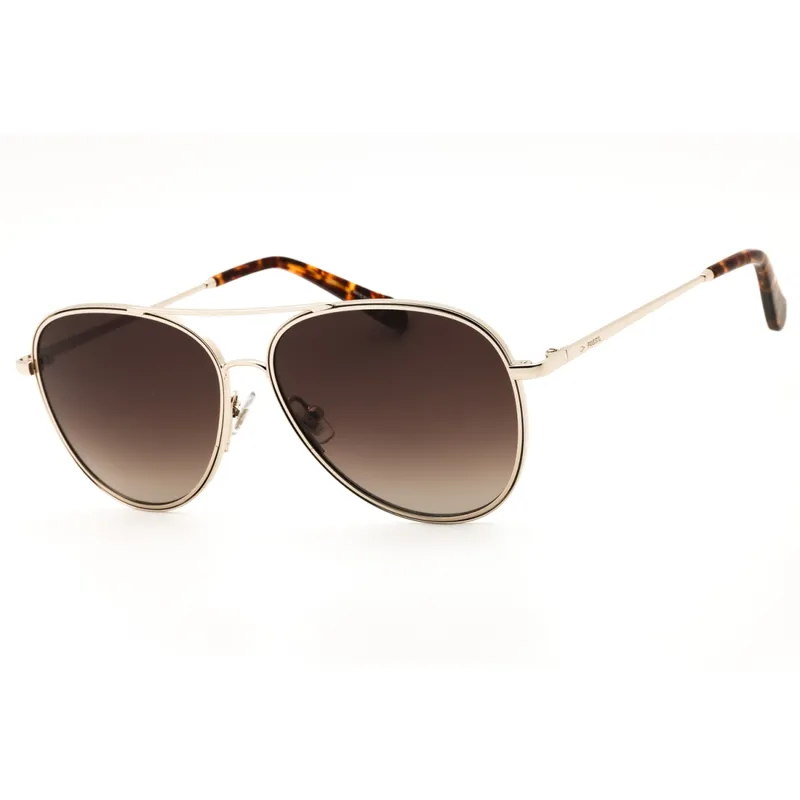
An aviator has teardrop-shaped lenses that are wider at the top and taper toward the nose, set in a thin metal frame, usually with a bar across the brow. The style began as eyewear for pilots, and the name stuck. Makers use "aviator" and "pilot" loosely, so you will see both words for similar frames.
The lens shape is the easy part to spot. The details below change how a pair looks and feels.
| Detail | What to look for |
|---|---|
| Brow bar | A straight bar above the bridge. One bar is classic; a double bar gives a busier, more retro look. |
| Nose pads | Small pads on thin arms. They can usually be adjusted by an optician, which helps fit. |
| Lens depth | Deeper lenses cover more of the cheek and feel bolder. Shallower ones look lighter. |
| Lens colour | Gradient, solid and mirrored lenses all come in this shape and change the mood of the frame. |
Who aviators suit
Aviators are a good first stop for many face shapes, because the rounded lower edge softens straight lines and the thin frame stays out of the way. These are common starting points, not rules:
- Square or angular faces: the curved lens edge softens a strong jaw.
- Oval faces: most proportions work, so size and colour matter more than shape.
- Round faces: choose a pair with a slightly angular brow bar, and avoid a very small lens that repeats the roundness.
- Narrow faces: a smaller lens width keeps the frame from swallowing your features.
For more on matching shape to face, see which shape suits your face.
Aviator sizes
Aviator lens widths run from about 52 to 62 mm. The classic metal aviator is often made in around three sizes, near 55, 58 and 62 mm, and other makers fall in between. Because the teardrop drops below the brow, a larger size also covers more of the cheek.
| Lens width | Usually suits |
|---|---|
| About 52 to 55 mm | Narrower faces, or a smaller, neater look |
| About 56 to 58 mm | Most adult faces; the middle of the range |
| About 59 mm and up | Wider faces, or a bold, oversized look |
If you are between sizes, see sizes for small faces and wide faces.
Getting the size right
Metal aviators come in a wide spread of lens widths, often from the low 50s to the low 60s in millimetres. A bigger number means a bigger frame, and the lenses can reach well down the cheek. Check the three numbers on the product page and compare them with a pair you already wear. Our guide to reading sunglasses sizes explains each one, and how to tell if sunglasses fit gives a quick mirror test.
Take the Fossil FOS2096/G/S in Light Gold as an example. Its page lists a 57 mm lens, a 14 mm bridge and a 140 mm arm, with clear nose pads and a double bar across the brow. The lenses shade from chocolate at the top to pale tan at the bottom. That is a mid-range size for the style.
How to wear them
- Keep the rest simple. A thin metal frame is already a statement, so let it be the one bold piece.
- Match metal to metal. Gold frames sit well with warm jewellery tones, and silver or gunmetal with cool ones, but nobody will stop you mixing.
- Check the bridge. Nose pads do the work here. If the pair slides, ask an optician to bend the pad arms in.
- Mind the brow. The bar should clear your eyebrows without pressing on them.
Where to browse
Start with unisex sunglasses, since many aviators are cut to work on anyone, then narrow by brand. The Fossil page is one place to compare similar metal frames side by side.
More guides
- Acetate vs Metal Sunglasses Frames: How to ChooseAcetate frames are thicker and hold rich colour. Metal frames are thinner and usually have adjustable nose pads. How to pick between them.Read the guide
- Shield and Wraparound Sunglasses, ExplainedShield sunglasses use one lens across both eyes. Wraparounds curve around the face. How they differ, how sizes work and who each one suits.Read the guide
- Sunglasses for Wide Faces: Sizes That WorkSunglasses for wide faces and larger heads: the lens widths and arm lengths that fit without pinching, and the shapes that look in proportion.Read the guide