
Guide
How to Choose Sunglasses as a Gift
GlareBear November 18, 2026 3 min read
The short answer
Check the three size numbers inside a pair they already wear and pick a new pair within about 2 mm on lens and bridge width. If you can't check, choose a middle size, a pilot or soft square shape, a black or havana frame and grey, brown or green lenses. Those choices suit the most people.
Start with a pair they already wear
The easiest way to get size right is to borrow a clue from sunglasses or glasses they already like. Look inside one of the temple arms for three numbers, such as 52-20-135. They are lens width, bridge width and temple length, in millimetres.
- Pick a new pair within about 2 mm of the old lens width and bridge width.
- Keep the shape close too. A deep square frame and a shallow round one with the same numbers sit differently.
- Temple length matters less, since a few millimetres either way is usually fine.
Our guide to reading sunglasses sizes explains each number in more detail.
If you can't check their sizes
When a surprise matters more than precision, choose the options that suit the most people.
| Choice | Safer pick | Riskier pick |
|---|---|---|
| Size | A middle size that matches their build | Very small or very oversized frames |
| Shape | Pilot (aviator) or a soft square | Strong cat-eye, shield or geometric shapes |
| Frame colour | Black, havana or tortoise, gold | Bright colours or clear frames |
| Lens colour | Grey, brown or green | Mirrored or bright tinted lenses |
Grey lenses change colours the least. Brown lenses add warmth and contrast. Green sits between the two. Our lens colour guide covers the rest.
Match the pair to how they live
Think about where they will wear them most, then use that to narrow the choice.
- Driving: a medium-dark lens in grey, brown or green, and slim temples that don't block side vision.
- Beach and water: a larger lens for more coverage. Polarized lenses cut glare off water. See when polarized matters and check each pair's page for its lens details.
- Sport: a wraparound or shield shape that stays put. See shield and wraparound sunglasses.
- Everyday and city: a classic shape in acetate or metal. See acetate vs metal frames.
Five questions to answer before you buy
- Do they wear sunglasses now, and what shape?
- Do they lean towards a brand they already wear? Browse all brands to find it.
- Is their face on the narrow or wide side? See small faces or wide faces.
- Do they prefer gold or silver tones in watches and jewellery? Match the metal parts of the frame to that.
- Will they wear them mainly in the car, outdoors or as a fashion piece?
An example of a safe classic
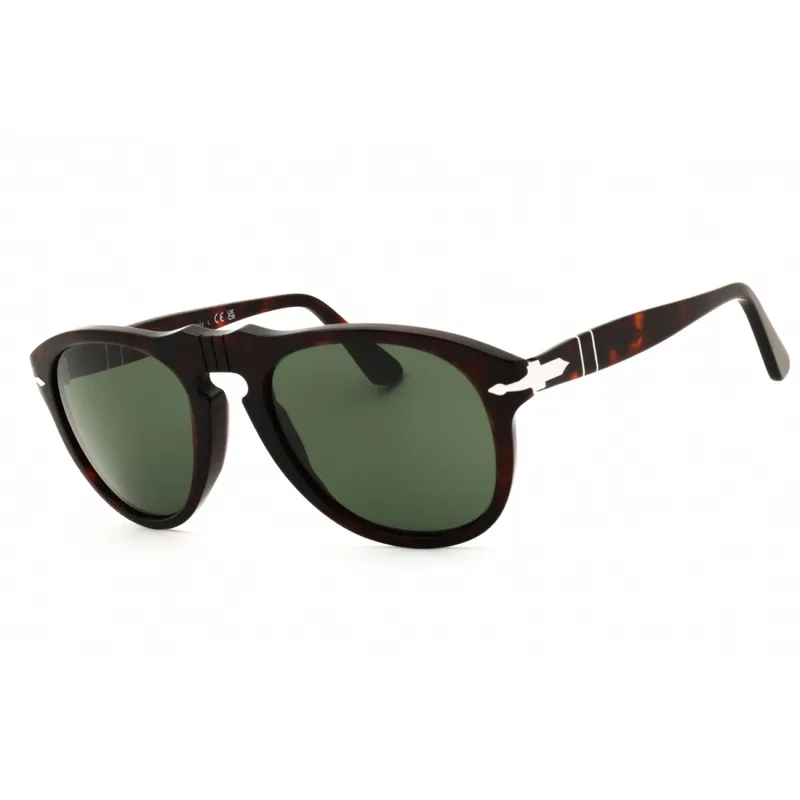
The Persol PO0649 in havana shows what a low-risk gift looks like. It is a men's full-rim pilot in dark havana acetate with solid green lenses, size 52-20-135, a middle size for many adult faces. The colours go with most outfits, and the pilot shape suits a wide range of face shapes.
Where to start
Browse by who the frame was cut for: women's sunglasses, men's sunglasses or unisex sunglasses. Each page lists the size under Fit, so you can compare it with the numbers from their current pair. If the size might be wrong, read our returns page before you order.
More guides
- Acetate vs Metal Sunglasses Frames: How to ChooseAcetate frames are thicker and hold rich colour. Metal frames are thinner and usually have adjustable nose pads. How to pick between them.Read the guide
- Shield and Wraparound Sunglasses, ExplainedShield sunglasses use one lens across both eyes. Wraparounds curve around the face. How they differ, how sizes work and who each one suits.Read the guide
- Sunglasses for Wide Faces: Sizes That WorkSunglasses for wide faces and larger heads: the lens widths and arm lengths that fit without pinching, and the shapes that look in proportion.Read the guide